

Golden Retriever History: From Scottish Highlands to Family Favorite
Golden Retrievers come from the Scottish Highlands. The breed was created in the 1860s by Dudley Marjoribanks, the first Lord Tweedmouth, at his Guisachan estate near Inverness, when he crossed a yellow Wavy-Coated Retriever named Nous with a Tweed Water Spaniel named Belle. Their descendants — bred for gentle mouths, keen noses, and love of water — became the Golden Retriever recognized by The Kennel Club in 1911 and the AKC in 1925.
It is a remarkable arc: a gundog engineered for cold Highland lochs became one of the most popular family dogs on earth. At Aspen Ridge Retrievers in Rigby, Idaho, we see both ends of that history every week — dogs bred from working lines whose real job today is mending hearts.
Key Takeaways
- The Golden Retriever was developed in the 1860s by Lord Tweedmouth (Dudley Marjoribanks) at the Guisachan estate in the Scottish Highlands.
- The foundational cross was Nous, a yellow Wavy-Coated Retriever, bred to Belle, a now-extinct Tweed Water Spaniel, in 1868.
- The breed was designed for waterfowl retrieving — a soft mouth, water-resistant double coat, strong swimming ability, and a biddable temperament.
- The Kennel Club recognized the breed in 1911 as "Retriever (Golden and Yellow)," renamed it Golden Retriever in 1920, and the AKC recognized it in 1925.
- English and American types diverged over the 20th century as breeders selected to two different standards — the source of today’s "English Cream vs. American" distinction.
- The traits Tweedmouth bred for — gentleness, trainability, devotion to people — are why Goldens dominate therapy and service-dog work today.
A Sporting Problem in Victorian Scotland
To understand the Golden Retriever, picture Victorian Scotland: driven shooting was at its height, breech-loading guns meant more birds down at longer distances, and much of that game fell into lochs, rivers, and rough upland cover. Sportsmen needed a dog that could mark a fallen bird at distance, swim powerfully in cold water, and carry game back undamaged in a soft mouth.
Dudley Marjoribanks — a wealthy businessman and Member of Parliament, later the first Baron Tweedmouth — set out to breed exactly that dog. He kept meticulous breeding records from 1835 to 1890, which is why the Golden Retriever has one of the best-documented origins of any breed.
Guisachan, Nous, and Belle: The Founding Cross
In 1865, Tweedmouth acquired Nous, a yellow puppy from an otherwise black litter of Wavy-Coated (Flat-Coated) Retrievers. At his Guisachan estate near Inverness, he bred Nous in 1868 to Belle, a Tweed Water Spaniel — a curly-coated working water dog from the Scottish Borders that is now extinct.
That cross produced four yellow puppies — Cowslip, Crocus, Primrose, and Ada — the foundation of the breed. Over the following decades, Tweedmouth line-bred their descendants, judiciously adding another Tweed Water Spaniel, an Irish Setter, and more wavy-coated blood, always selecting for yellow coats, retrieving ability, and steady temperament.
For years a romantic legend claimed the breed descended from a troupe of Russian circus dogs. It was a wonderful story, and it was false — Tweedmouth’s stud books settled the matter when they were examined in the 1950s.
Built for the Water
Everything distinctive about a Golden traces back to the job it was designed for:
- The soft mouth — game had to come back undamaged, which is why your Golden can carry an egg (or your favorite slipper) without leaving a mark.
- The double coat — a water-repellent outer coat over dense undercoat, insulation for repeated retrieves in cold Highland water.
- The swimming build — deep chest, powerful hindquarters, and that thick tail working as a rudder.
- The nose and marking ability — from setter and retriever blood, letting the dog find a fallen bird it never saw land.
- The biddable temperament — a dog that worked all day beside its handler had to be cooperative, patient, and eager to please.
That last trait turned out to be the breed’s destiny. The qualities that made a great gundog are exactly what makes a great family, therapy, and service dog today.
Official Recognition: The Kennel Club and the AKC
Goldens first appeared at British shows in the early 1900s, classified simply as Flat Coats of golden color. The Kennel Club recognized them as "Retriever (Golden and Yellow)" in 1911, and the breed received its modern name in 1920.
The breed had already begun crossing the Atlantic; Tweedmouth’s sons brought Goldens to North America in the 1890s. The American Kennel Club formally recognized the Golden Retriever in 1925, and the Golden Retriever Club of America — today one of the largest breed clubs in the world — was founded in 1938.
The breed’s brains sealed its American reputation: when the AKC introduced the Obedience Trial Champion title in 1977, the first three dogs ever to earn it were all Golden Retrievers. The breed has hovered near the top of AKC registration rankings for decades since.
The Great Divergence: English and American Types
Once the breed was established on both continents, something subtle happened: breeders on each side selected toward their own written standard for a hundred years. The Kennel Club and FCI standard accepted cream coats and favored a substantial, level-backed dog; the AKC standard described a rich golden coat and a slightly racier outline.
The result is today’s two recognizable types — the blockier, cream-coated "English" Golden and the leaner, deeper-gold "American" Golden — one breed, two accents. A parallel split grew between show and field lines, with working breeders keeping the darker, higher-drive dogs closest to Tweedmouth’s original gundog.
We compare the two types honestly in English Cream vs. American Golden Retriever, and you can trace the full coat spectrum that history produced in Golden Retriever colors explained.
From Gundog to Family Favorite — and Healer
The Golden’s second act began after World War II, when suburban families discovered that the patient gundog was also a nearly ideal companion. Registrations soared through the 1970s and 80s, helped along by Goldens in the White House and on every other TV screen.
The third act may be the most meaningful. Goldens and Golden crosses now make up a large share of the world’s guide, service, and therapy dogs. That combination of emotional steadiness, soft touch, and genuine delight in people is very hard to engineer — Tweedmouth did the hard part 150 years ago.
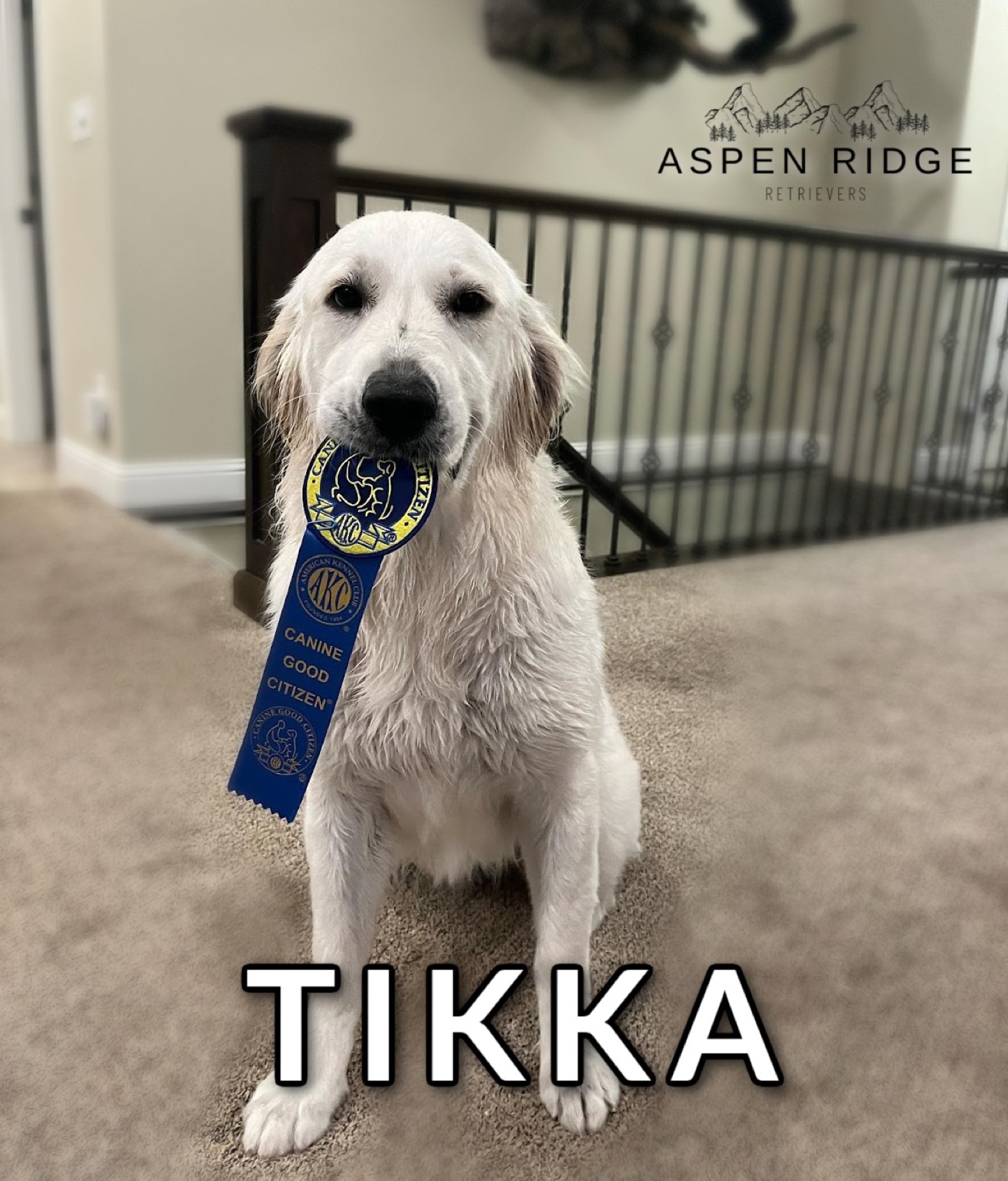
That heritage is alive at our kennel: our breeding dogs serve weekly in clinical therapy settings with children and adults recovering from accidents and injuries — mending hearts and building families is really just the modern chapter of this same history. If that work interests you, read how to train a therapy dog.
Owning a Piece of the History
When a Golden Retriever curls up on your kitchen floor tonight, it carries all of this: a Highland estate, a yellow puppy named Nous, a water spaniel breed that no longer exists, and 150 years of selection for one trait above all — devotion to people.
If you are thinking about bringing that history home, start with our complete breed guide, meet our current Retriever puppies, or fill out a puppy application — we would love to help you write the next chapter.
Frequently Asked Questions
Meet Our English Cream Retrievers
Mending Hearts and Building Families through the power of a dog — raised in Rigby, Idaho from health-tested, therapy-certified parents.