Golden Retriever Shedding & Grooming: The Complete Guide
Yes, Golden Retrievers shed — a lot. They shed moderately every day of the year and heavily twice a year when they "blow" their undercoat in spring and fall. If a low-hair home is a dealbreaker, this is not your breed. The good news: a simple weekly routine with two inexpensive tools keeps the hair manageable and the coat gorgeous.
After 15+ years of living with, breeding, and grooming Golden and English Cream Retrievers at Aspen Ridge in Rigby, Idaho, we’ve brushed out more undercoat than we could weigh. Here’s our complete, honest guide — the double coat, the routine, the tools, and the skin problems worth catching early.
Key Takeaways
- Golden Retrievers shed moderately year-round and heavily twice a year during spring and fall "coat blows" that last two to three weeks.
- The double coat — a water-repellent outer coat over a soft insulating undercoat — keeps a Golden warm in winter and cool in summer, which is why you should never shave it.
- Two tools handle most of the work: a slicker brush for the outer coat and feathering, and an undercoat rake for the loose undercoat that becomes house hair.
- Brush 2–3 times a week (daily during coat blows), bathe every 6–8 weeks, and check ears weekly — Goldens’ floppy ears trap moisture and are prone to infection.
- Puppies trade their fluffy coat for the adult coat between roughly 6 and 18 months, starting with a "ridge" of adult hair down the back.
- Sudden flaking, hot spots, or patchy hair loss are skin red flags, not grooming failures — flaking in English lines can indicate ichthyosis.
The Double Coat, Explained
A Golden Retriever wears two coats at once. The outer coat (guard hairs) is the wavy, water-repellent layer you see — it sheds rain, blocks dirt, and gives the breed its shine. Beneath it lies the undercoat: dense, soft, insulating fluff that thickens for winter and sheds out for summer.
This system is brilliant engineering from the breed’s waterfowl-retrieving history — it insulates against icy water and, just as importantly, against summer heat by trapping a layer of temperature-buffering air. Nearly everything in this guide follows from one fact: the undercoat is constantly renewing itself, and the old undercoat has to go somewhere. Your job is to make sure it goes into a brush instead of onto your couch.
How Much Do Golden Retrievers Really Shed?
We’ll give it to you straight, because honesty is how we operate: Goldens are heavy shedders. Expect visible hair on floors, furniture, and clothing year-round, and plan on a vacuum that earns its keep.
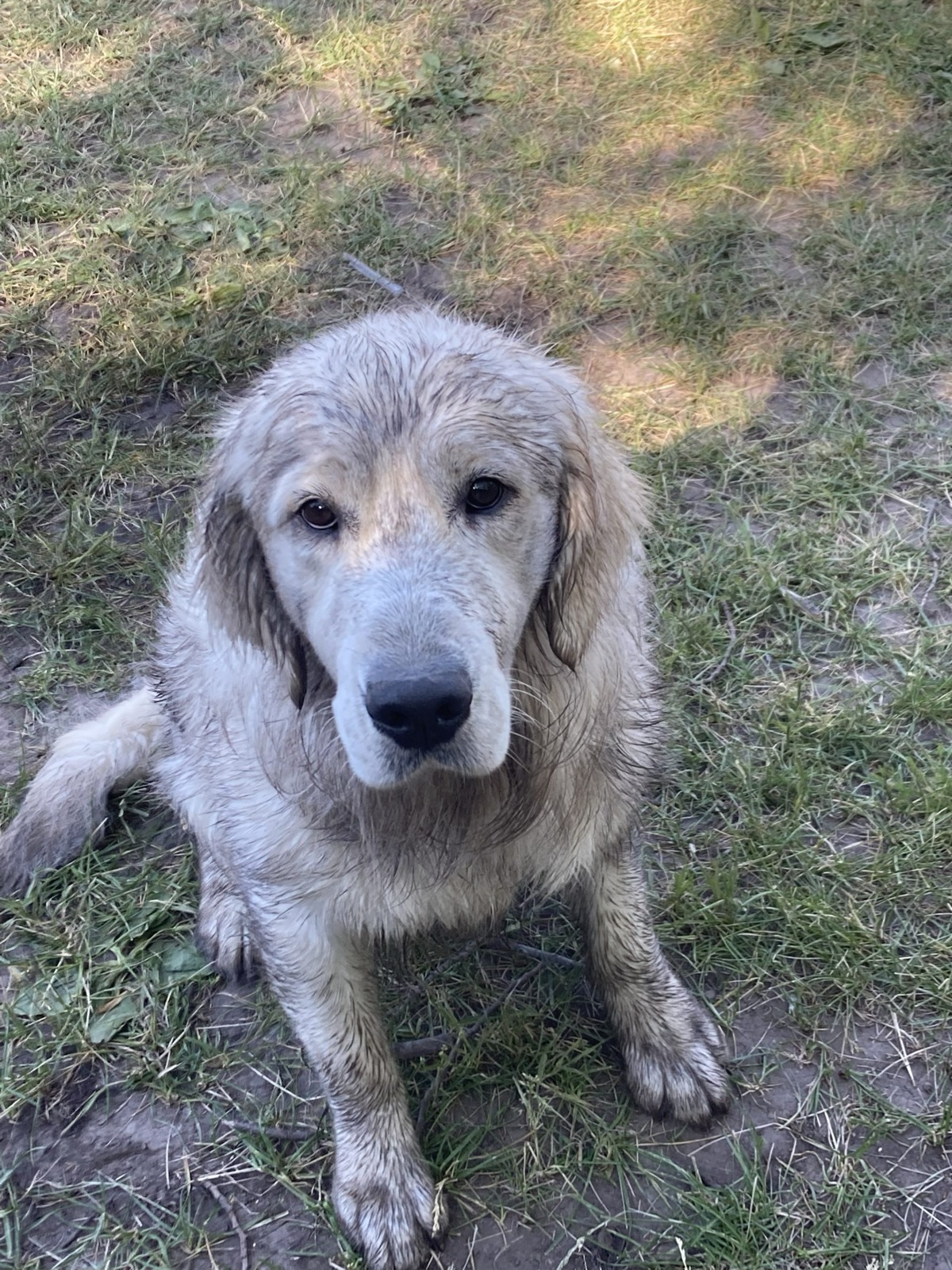
Twice a year — typically spring and fall — the undercoat releases all at once in a coat blow. For two to three weeks you can brush out a grocery bag of fluff and the dog just keeps producing more. This is normal, healthy, and unavoidable; daily raking during a blow is the only real remedy.
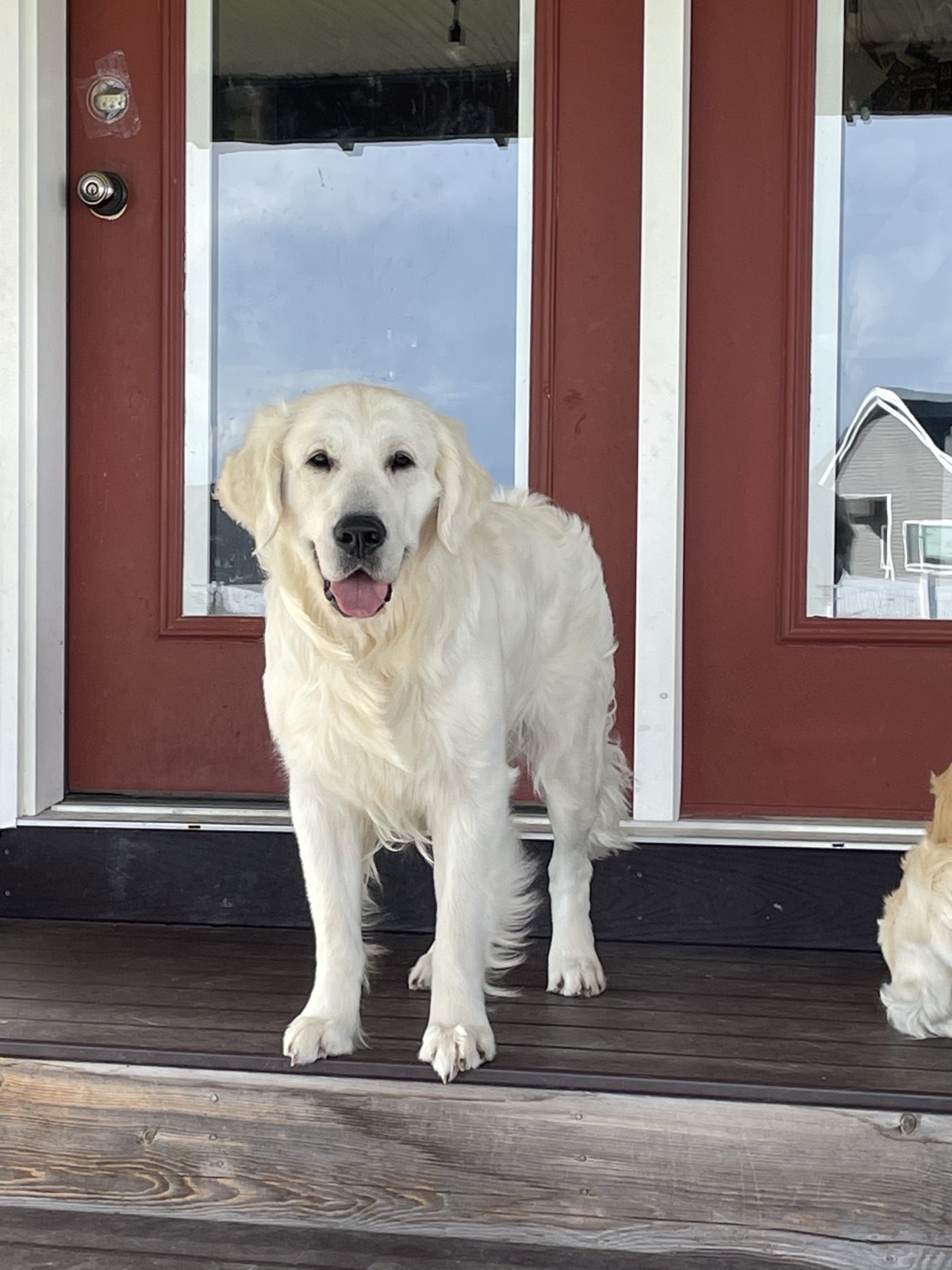
English Cream and American Goldens shed comparably. The cream coat is often slightly shorter and wavier with less dramatic feathering than a heavily-coated American Golden, which can make it a touch easier to maintain — but nobody escapes the undercoat. For the full comparison, see our English Cream breed guide.
The Weekly Grooming Routine
Consistency beats intensity. Here’s the routine we recommend to every puppy family:
- Brush 2–3 times a week, 10–15 minutes per session — daily during spring and fall coat blows. Work with the coat’s direction, and don’t skip the "hidden" zones: behind the ears, the pants (rear thighs), the tail, and the armpits, where mats form first.
- Bathe every 6–8 weeks with a dog-specific shampoo — more often only if your Golden finds something to roll in. Overbathing strips the coat’s natural oils and dries the skin.
- Dry and brush after every bath and swim. A damp undercoat left to sit is the classic setup for hot spots.
- Check ears weekly and after swimming. Floppy ears plus water equals infections — a vet-approved ear cleaner used routinely prevents most of them.
- Trim nails every 3–4 weeks. If you hear clicking on hard floors, they’re overdue.
- Brush teeth several times a week — dental health is quietly one of the biggest factors in how long Golden Retrievers live.
Tools That Actually Work
You don’t need a drawer full of gadgets. Two tools do 90% of the job:
- A slicker brush — fine, bent wires that smooth the outer coat, work through feathering, and catch surface shed. Your everyday brush.
- An undercoat rake — widely-spaced rounded teeth that reach through the guard hairs and pull out loose undercoat. This is the coat-blow workhorse; use it gently and stop when the fluff stops coming.
- Optional: a metal comb for finishing work behind the ears and in feathering, and blunt-tipped thinning shears for tidying feet and ear edges.
One firm rule: never shave a Golden Retriever. Shaving a double coat destroys its insulation (making dogs *hotter* in summer, not cooler), exposes pink skin to sunburn, and the coat often regrows patchy and wooly. Skip shave-downs and be cautious with aggressive de-shedding blades that cut guard hairs — a rake and a slicker, used regularly, are all the coat needs.
Puppy Coat to Adult Coat
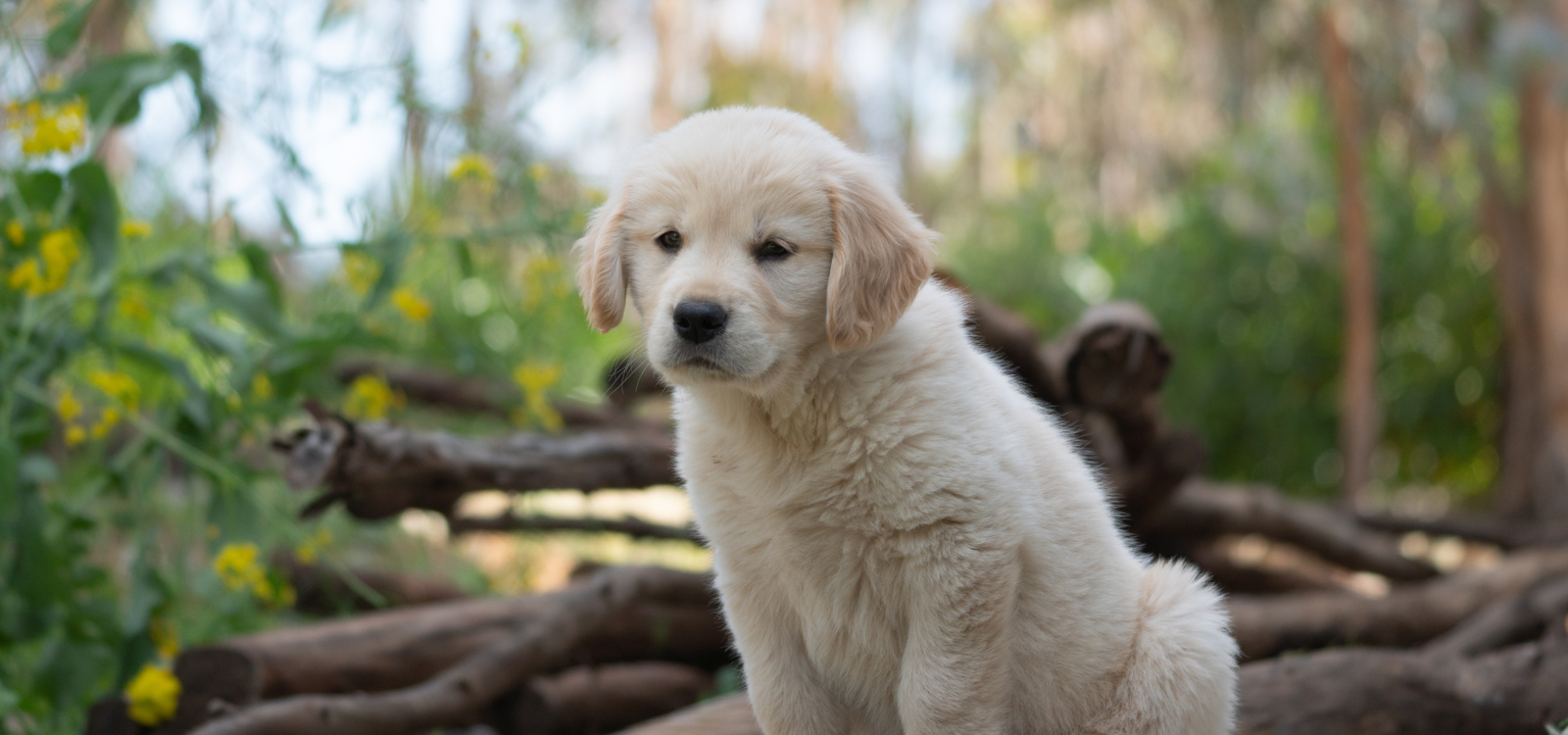
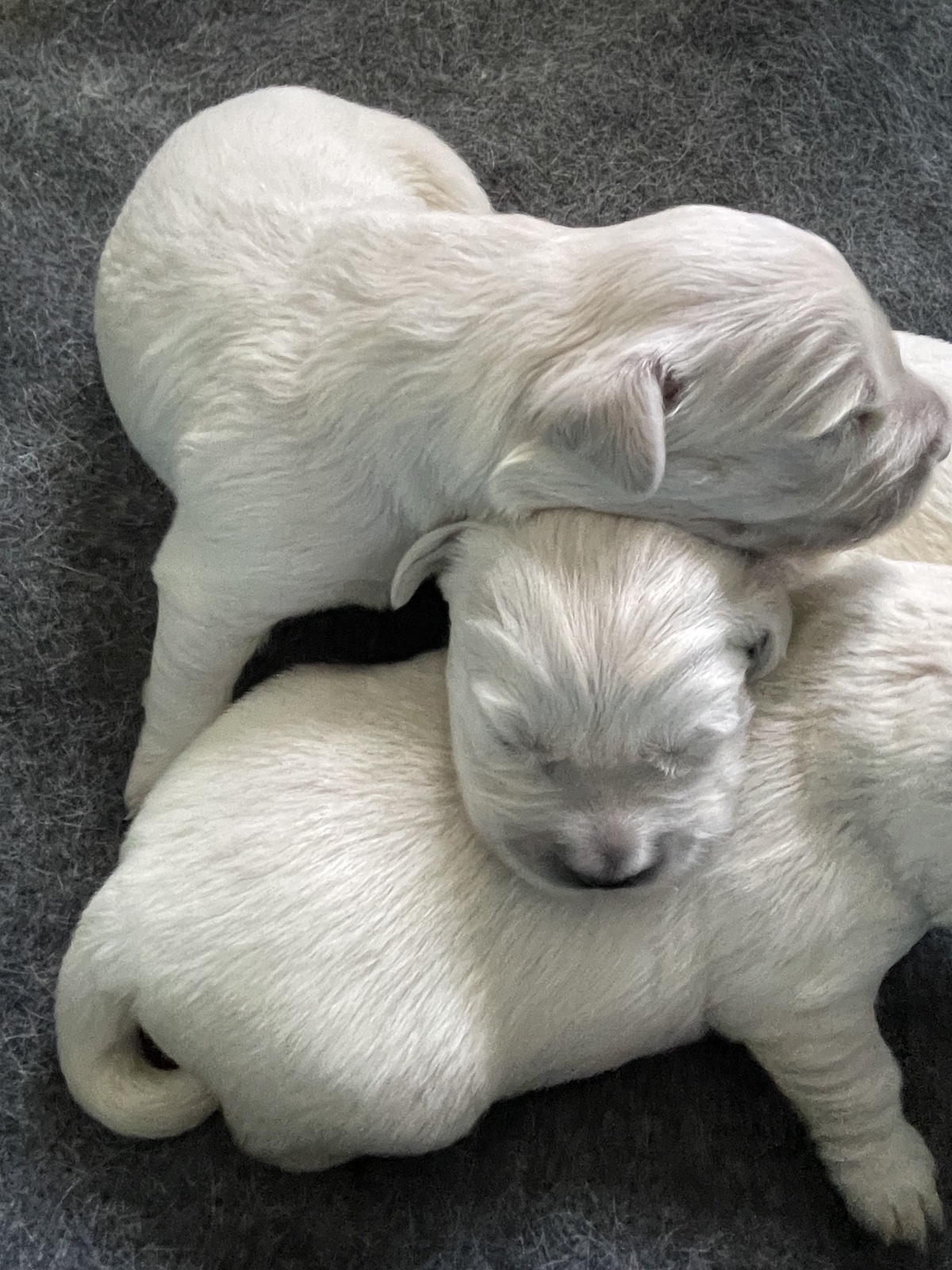
Golden puppies are born with soft, fluffy puppy fuzz — and very little shedding, which lulls new owners into false confidence. Between roughly 6 and 18 months, the adult coat grows in, usually starting as a visible strip of darker, sleeker adult hair down the spine (breeders call it the ridge or racing stripe) and filling in from there. Feathering on the legs, tail, and chest keeps developing until age two or so.
Start grooming habits long before the adult coat arrives. A puppy that learns to relax for two minutes of gentle brushing, paw handling, and ear checks becomes an adult that treats grooming as a massage. It’s the same principle behind all early training — see our guide to puppy development stages for what to expect when.
Skin Health Red Flags
Grooming time doubles as a weekly health scan — your hands will find problems before your eyes do. Call your vet about:
- Hot spots — raw, moist, rapidly-spreading sores, often after swimming or under a matted patch. They can go from dime to palm-sized in a day.
- Persistent flaking or scaling. Some dandruff in winter is normal; heavy, waxy flakes in an English-line Golden can indicate ichthyosis, a manageable genetic skin condition. Our ichthyosis guide explains what it looks like and why we test for it.
- Patchy hair loss, redness, or constant scratching — often allergies, parasites, or thyroid issues rather than coat problems.
- A dull, greasy, or smelly coat that doesn’t resolve with a bath — coat quality reflects internal health, so a persistent change warrants a vet visit.
Living Comfortably With the Hair
Every Golden family makes peace with hair; the smart ones make systems. Brush outdoors so the fluff blows away instead of settling inside. Keep a washable throw on the dog’s favorite couch spot. A robot vacuum running daily, a rubber grooming glove for quick passes, and a lint roller by the door handle the rest. During coat blows, five minutes of raking per day saves an hour of vacuuming per week.
Here’s the truth after 15 years of Golden hair on our floors and our hearts: you trade a little housekeeping for the best family dog on earth, and it’s the easiest bargain you’ll ever make. If you’re ready for both the fluff and the love, meet our English Cream Retriever puppies or start your puppy application.
Frequently Asked Questions
Meet Our English Cream Retrievers
Mending Hearts and Building Families through the power of a dog — raised in Rigby, Idaho from health-tested, therapy-certified parents.