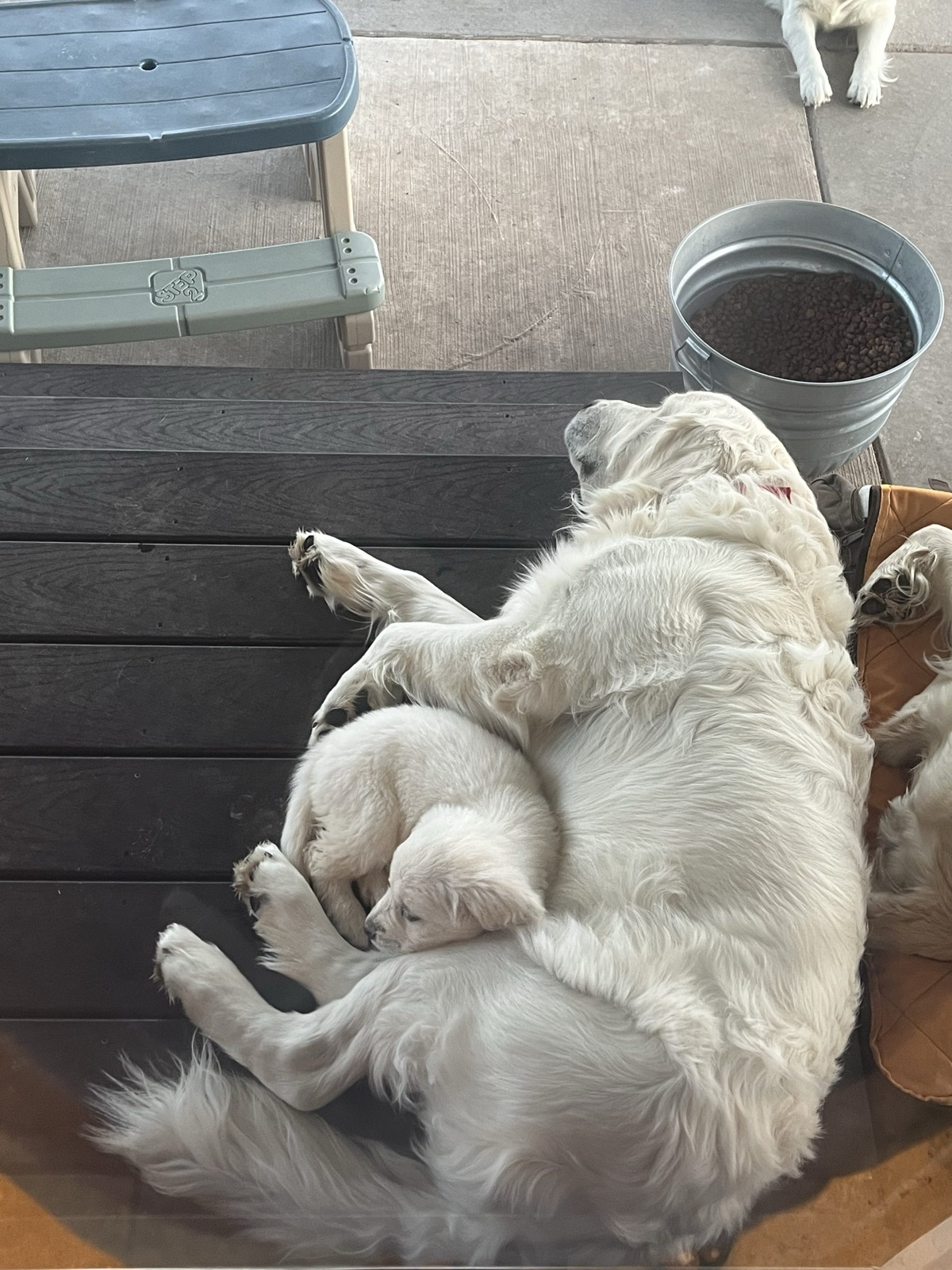

New Golden Retriever Puppy Checklist: Everything You Need
Bringing home a Golden Retriever puppy goes smoothly when you prepare before the puppy arrives, not after. The essentials fit into six groups: a crate and a raised place bed, food and bowls, a collar, leash, and ID tag, grooming tools, safe toys and chews, and a puppy-proofed home — plus a vet appointment booked within the first two business days.
After 15+ years of sending Aspen Ridge puppies home from Rigby, Idaho, we know exactly which purchases matter, which can wait, and what the first 48 hours actually look like. Here it is, group by group, so day one feels calm instead of chaotic.
Key Takeaways
- Buy the crate, place bed, food, bowls, collar, leash, ID tag, grooming tools, and chew toys before pickup day — not after.
- Size the crate for a 55–75 pound adult and use a divider so the puppy-sized space grows with your dog.
- Schedule a vet visit within the first 2 business days of bringing your puppy home — our health guarantee requires it, and most reputable breeders’ contracts do too.
- Keep the first 48 hours quiet: one room, a short list of people, and no trips to busy public places.
- Start feeding, potty, crate, and sleep routines on day one — an 8-week-old puppy learns the household rhythm within days.
Crate, Kennel, and a Place Bed
The single most important purchase is a sturdy wire or plastic crate. Buy one sized for your Golden’s adult weight — roughly 42 inches for a dog that will mature at 55–75 pounds — and use the included divider panel to shrink the space while your puppy is small. Too big invites back-corner accidents; properly sized, it becomes a den your puppy genuinely likes.
Alongside the crate, add a raised cot-style place bed — teaching a puppy to settle on a designated spot is one of the highest-value skills a family dog can learn. Our place training guide shows you how, and our kennel training guide covers making the crate a happy place rather than a punishment.
- 42-inch crate with divider — wire with a removable tray is easiest to clean.
- Raised place bed (cot style) — chew-resistant, easy to wipe down.
- Washable crate pad or old towels — skip the expensive bed until teething is over.
Food, Bowls, and Treats
Ask your breeder what food the litter has been eating and buy a bag of the same formula before pickup — switching foods on day one is the fastest route to an upset stomach. Choose a large-breed puppy formula, which controls calcium and growth rate to protect developing joints. Our Golden Retriever puppy feeding guide covers schedules, amounts, and when to transition.
- Large-breed puppy food — the same brand the litter was raised on, at least for the first two weeks.
- Two heavy bowls — stainless steel or ceramic; skip elevated feeders for puppies.
- Small soft training treats — pea-sized, low-calorie, used generously the first months.
Collar, Leash, and Identification
Buy an adjustable flat collar — you will replace it at least twice in the first year — and attach an ID tag with your phone number the day your puppy comes home. Puppies are escape artists, and a tag works even before the microchip is registered.
- Adjustable flat collar — snug enough that two fingers fit underneath.
- 6-foot leash — flat nylon or biothane; save retractable leashes for never.
- ID tag with your cell number — on the collar from day one.
Grooming Tools, Toys, and Chews
Grooming habits start young — a double-coated puppy brushed gently for two minutes a day grows into an adult who tolerates full grooming happily. Rotate a handful of chews rather than offering every toy at once; novelty keeps them interesting.
- Slicker brush and metal comb — two minutes daily builds the habit.
- Nail clippers or a grinder — touch the paws every day from week one.
- Puppy shampoo and dog toothpaste — human products irritate dog skin.
- Rubber chew toys, a frozen washcloth, and food-stuffable toys — teething relief that isn’t your furniture.
Puppy-Proofing Your Home
Get down to puppy height and look at each room — anything at nose level will be tasted. The goal is a home where the puppy can only make good choices.
- Secure electrical cords — cord covers or furniture blocking access.
- Move houseplants up — several common plants are toxic to dogs.
- Lock away chemicals, medications, and trash — cabinet latches work.
- Pick up shoes, socks, and kids’ toys — the classic swallowed-object vet visits.
- Gate off stairs and off-limit rooms.
- Check the yard fence — a Golden puppy can squeeze through a shockingly small gap.
The First 48 Hours: A Simple Plan
The most important appointment on the checklist isn’t a purchase at all. Book a vet visit within the first two business days of bringing your puppy home. Our contract and health guarantee requires this initial exam, and it protects you: your own vet confirms your puppy’s health while the guarantee window is open. Bring the shot record we send home so your vet can schedule the remaining boosters.
Beyond the vet visit, keep the first two days deliberately boring. Let your puppy explore one room at a time, meet household members gradually, and nap freely — 8-week-old puppies sleep 18–20 hours a day. Skip the pet store and the family party; socialization can wait until your puppy has settled in.
Expect crying the first night or two — your puppy just left its mother and littermates. Put the crate in your bedroom, offer a calm potty break if the crying escalates, and resist starting a habit of 2 a.m. playtime. Most Aspen Ridge puppies settle into nights within three to five days.
Set Routines From Day One
Puppies thrive on predictability, and the routine you run in week one becomes the habit your adult dog keeps for life. Feed at the same times, go out the same door to the same potty spot, and put the puppy in the crate for naps at regular intervals — overtired puppies get bitey by evening.
Start potty training the moment you arrive home, and begin gentle name recognition and handling exercises the first week. None of it needs to be formal; it just needs to be consistent.

What Comes Home With an Aspen Ridge Puppy
A good breeder shortens your checklist. Every Aspen Ridge puppy goes home vaccinated and dewormed on schedule, with a complete shot record for your veterinarian, our written health guarantee, and guidance on the food the litter has been raised on. Raised in our home around the daily routine of a working therapy-dog household, our puppies already know the crate, the vacuum, and household noise.
If you are still in the planning stage, take a look at our available English Cream Retriever puppies or fill out our puppy application — and by the time pickup day arrives, this checklist will have your home more than ready.
Frequently Asked Questions
Meet Our English Cream Retrievers
Mending Hearts and Building Families through the power of a dog — raised in Rigby, Idaho from health-tested, therapy-certified parents.