
Service Dog vs. Therapy Dog: What’s the Difference?
A service dog is individually trained to perform specific tasks for one handler with a disability and has public access rights under the Americans with Disabilities Act (ADA). A therapy dog does the opposite: it comforts many people — in hospitals, schools, and clinics — but only by invitation, with no special legal access rights. Emotional support animals (ESAs) are a third, separate category with no task training and no public access.
These terms get mixed up constantly, and the confusion has real consequences — from families expecting access rights a therapy dog does not have, to fake "service dog" vests undermining legitimate teams. At Aspen Ridge Retrievers, our dogs work every week in real clinical therapy settings, so this distinction is part of our daily life. Here is the clear breakdown.
Key Takeaways
- A service dog is task-trained to mitigate one handler’s disability and has public access rights under the ADA; businesses may only ask if the dog is required for a disability and what tasks it performs.
- A therapy dog volunteers comfort to many people in facilities that invite it — hospitals, schools, clinics — and has no ADA public access rights.
- Emotional support animals provide comfort by presence alone, require no training, and have no public access rights; they are distinct from both service and therapy dogs.
- Service dog training typically takes 1.5–2 years; therapy dog certification usually requires a well-trained adult dog that passes a temperament evaluation with a registering organization.
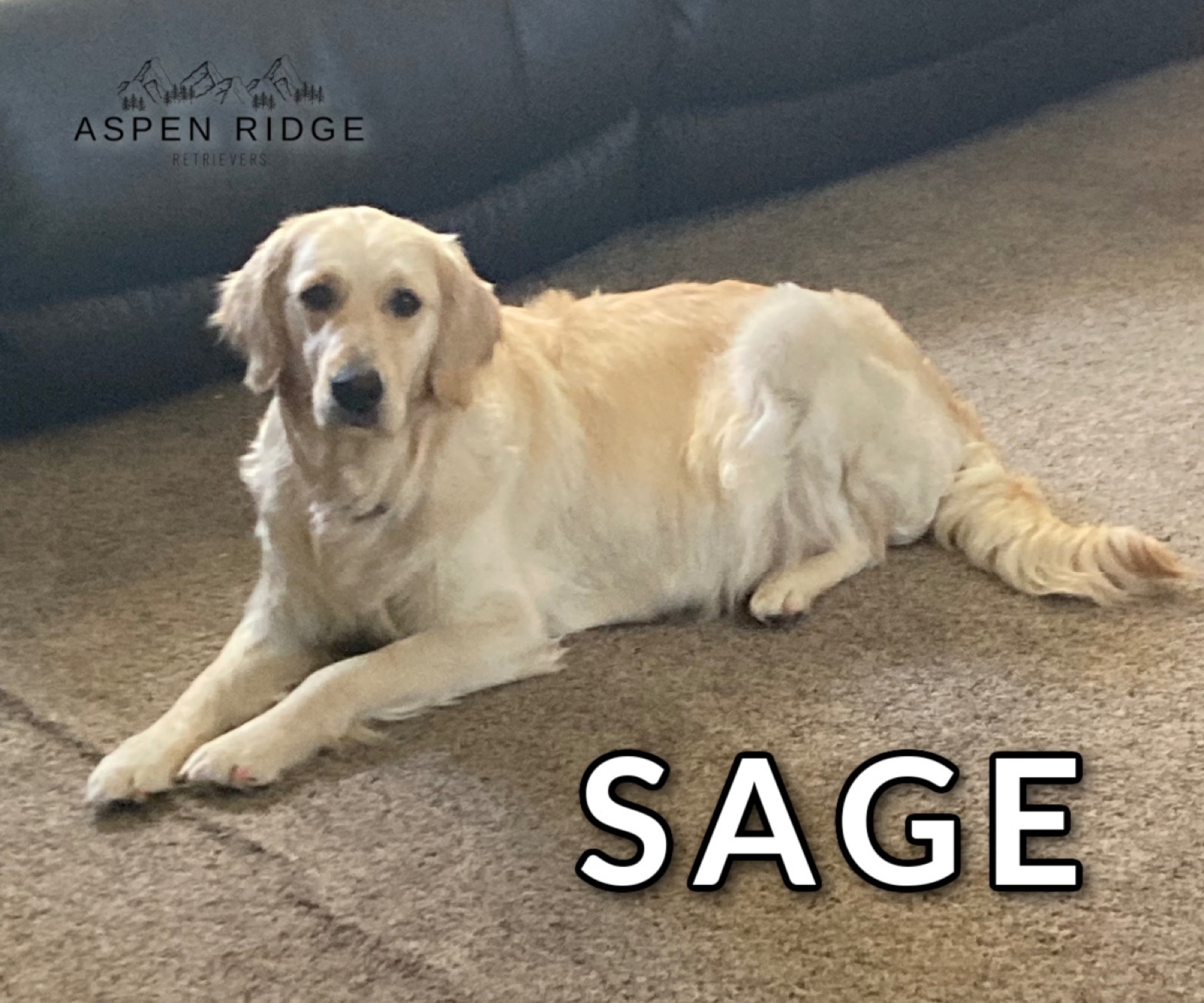
- Golden Retrievers excel at both roles thanks to their steady, people-oriented temperament — our own Sage and Tikka are registered working therapy animals serving in pediatric clinical settings.
- The best foundation for either path is the same: a genetically sound puppy, thorough socialization, and the AKC Canine Good Citizen test.
The Legal Definitions, Side by Side
Under the ADA, a service dog is a dog individually trained to do work or perform tasks for a person with a disability — guiding a blind handler, alerting to seizures or low blood sugar, retrieving dropped items, interrupting panic attacks. The task must directly relate to the handler’s disability. Service dogs may accompany their handler almost anywhere the public can go, and staff may legally ask only two questions: is the dog required because of a disability, and what work or task is it trained to perform. There is no federal registry, no required vest, and no official ID card — sites selling "official service dog registration" are selling paper.
A therapy dog works in the opposite direction: instead of serving one handler, it provides comfort and affection to many people — patients, students, residents — in facilities that have invited the team in. Therapy dogs are typically certified through organizations like the Alliance of Therapy Dogs or Pet Partners, and they have no ADA public access rights. A therapy dog goes where it is welcomed, not wherever it wants.
An emotional support animal (ESA) is different again: it comforts its owner simply by being present, requires no specialized training, and has no right of access to stores, restaurants, or (since 2021 rule changes) airline cabins. ESAs retain some housing protections under the Fair Housing Act, but calling an ESA a service dog is both incorrect and, in many states, illegal.
Access Rights: Where Each Dog Can Go
This is where the practical difference bites, so here it is plainly:
- Service dog. Restaurants, stores, hotels, taxis, hospitals, airplanes — nearly anywhere its handler goes. Refusing access is a federal violation.
- Therapy dog. Only facilities that invite it, on scheduled visits, usually with liability insurance through its registering organization. At the grocery store, it is a pet.
- ESA. No public access. Housing accommodations only.
Please do not put a "service dog" vest on a therapy dog or pet to bring it into stores. Every poorly behaved fake makes life measurably harder for disabled handlers whose dogs are legitimate — and it violates the honesty this entire system depends on.
Training Paths and Timelines
The two roles demand different training investments:
- Service dog: roughly 1.5–2 years. Foundation obedience, months of public-access training (neutral in every environment), then task training specific to the handler’s disability. Programs and owner-trainers commonly log 120+ hours; washout rates are high even in professional programs because the standard is so demanding.
- Therapy dog: usually 6–12 months of solid training on an adult dog. Reliable obedience, rock-steady manners around strangers and equipment, then a temperament evaluation and supervised visits with a registering organization. Most organizations require the dog to be at least one year old.
For both paths, the AKC Canine Good Citizen test is the standard first milestone — a 10-skill test of manners and steadiness that most therapy organizations treat as a de facto prerequisite. Our parent dogs hold CGC titles, and we walk families through the process in how to train a therapy dog.
Why Golden Retrievers Excel at Both Roles
Golden Retrievers are one of the top breeds in both service and therapy work, and it is no accident. The breed was designed for a soft mouth, a handler-focused work ethic, and an unflappable temperament — the exact traits both jobs demand.
A service dog must stay task-focused through crowds, food courts, and chaos. A therapy dog must stay soft and welcoming while a stranger in a hospital bed grabs its ears. Goldens bring the same answer to both: steady nerves, genuine love of people, and enough biddability to hold their training under pressure. Their size also matters — large enough for bracing and retrieval tasks, gentle enough to rest a chin on a child’s lap.

Our Program’s Real-World Experience
This topic is not academic for us. Sage and Tikka are registered working therapy animals, serving weekly in pediatric clinical settings with children and adults recovering from accidents, injuries, and disabilities. Watching a nervous child relax the moment Sage rests her head on the exam table is the reason our tagline is "Mending Hearts and Building Families through the power of a dog."
That weekly clinical work does something a pedigree alone cannot: it proves the temperament of our breeding dogs in the most demanding real-world environment there is. And it shows in the puppies — many Aspen Ridge puppies have gone on to become service and therapy dogs with their families across the country.
We are careful with our claims here, because honesty matters: no breeder can promise you a puppy will certify as a service dog. What we can do is start you with proven working temperament on both sides of the pedigree, which stacks the odds meaningfully in your favor.
Starting with a Puppy: The Path We Recommend
Whether your goal is service work, therapy visits, or simply an exceptionally steady family dog, the foundation is identical:
- Start with temperament, not color. Choose a breeder whose dogs demonstrably work — titles, therapy registration, clinical experience — and tell them your goal so they can match you with the steadiest, most people-focused puppy in the litter.
- Socialize relentlessly and positively. The window before 16 weeks shapes the adult dog. Surfaces, sounds, wheelchairs, kids, elevators — our puppy socialization guide has the full plan.
- Build obedience early. Short, positive sessions from day one; basic manners by six months.
- Earn the CGC around 1 year. It is the gateway credential for therapy registration and the natural checkpoint before service task training.
- Then specialize. Join a therapy organization for evaluations and supervised visits, or work with a qualified service dog trainer for task and public-access training.
If a working prospect — or just a wonderfully steady companion — is what you are looking for, tell us your goals on our puppy application. Matching the right temperament to the right job is the part of this we love most.
Frequently Asked Questions
Meet Our English Cream Retrievers
Mending Hearts and Building Families through the power of a dog — raised in Rigby, Idaho from health-tested, therapy-certified parents.